

Evals
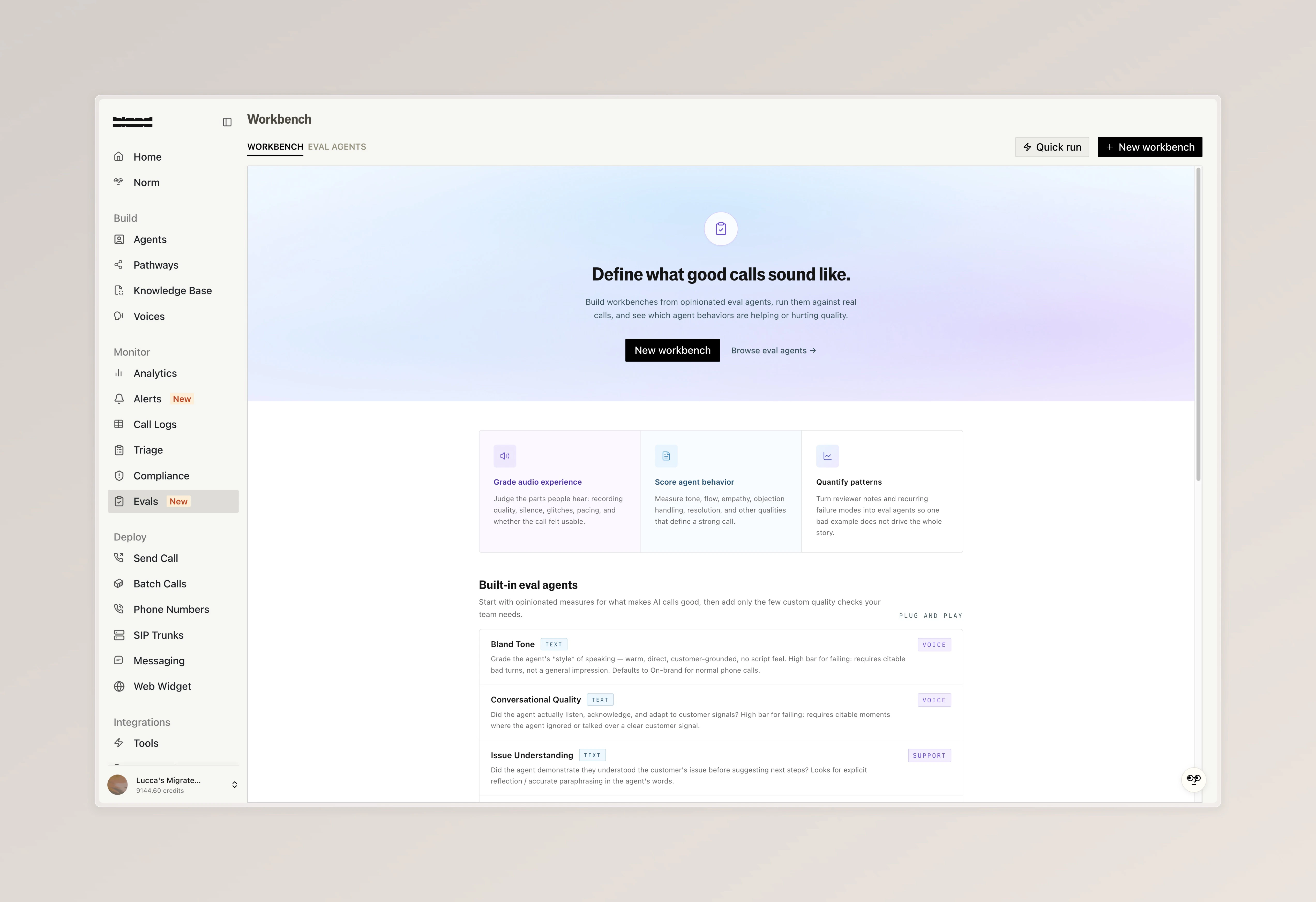
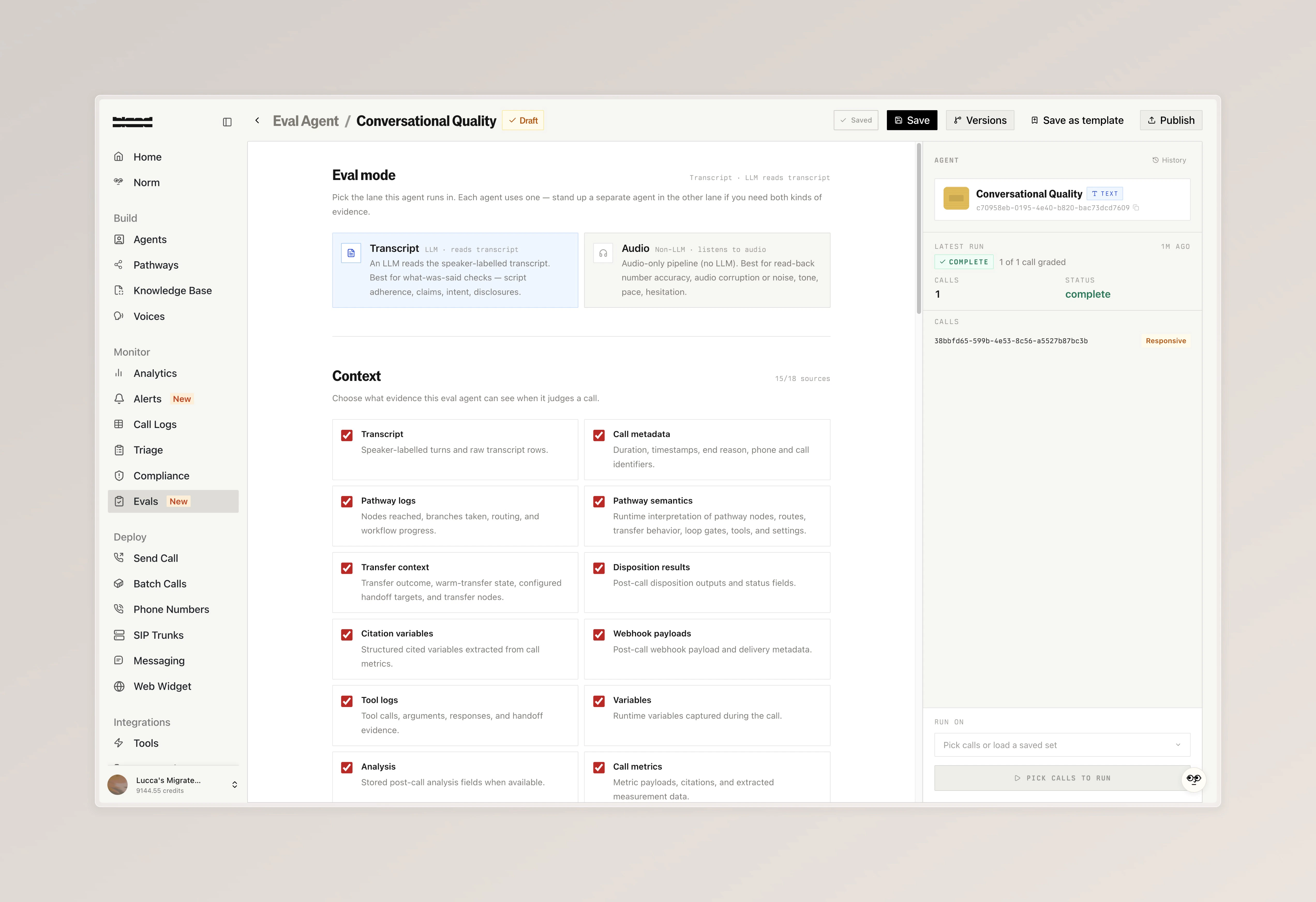
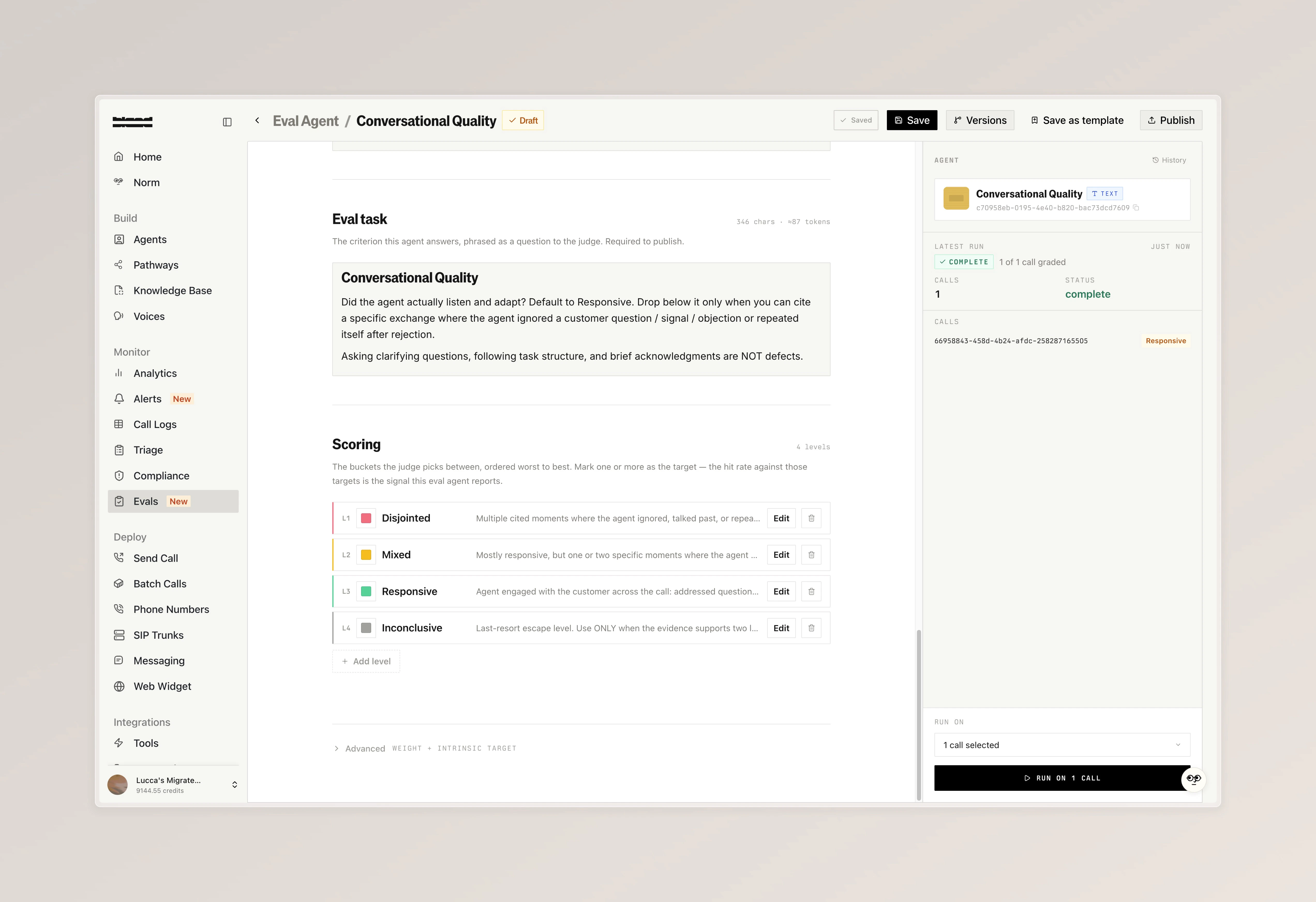
Evals run LLM judges against your call history to grade quality dimensions like audio, tone, hallucinations, and resolution. Available at the Evals page, see the docs.- Build a workbench of eval agents, each one grading a single dimension with a custom rubric and configurable evidence sources (transcript, metadata, pathway logs, citations, tool logs, and more)
- Pick Transcript or Audio mode per agent depending on whether you need an LLM to read the transcript or a non-LLM pipeline to listen to the recording
- Score up to 5,000 calls in a single run against a saved benchmark set, and start from a template library covering Bland Tone, Conversational Quality, Issue Understanding, and more
- Workbench
- Configure
- Scoring
Flex Mode
Let your agent decide where to go next based on the conversation instead of following hardcoded edges. See the docs.- Toggle pathways between strict and flex execution
- Group nodes on the canvas. Edges between grouped nodes become conditional and the agent picks the next step from context
- Scheduling, IVR, and Orchestrator nodes stay locked to their wired edges and can’t be added to a flex group
Components
Wrap a subset of nodes into a reusable Component and Bland compiles it into one graph at agent runtime. A new scope tab bar switches between the main pathway and each Component’s own canvas.Sentinel [Enterprise]
Sentinel is the newest platform release, joining Sonic, Serenade, and Sync on the Releases page. Three new investments in call reliability and observability.- Proprietary Noise Cancellation. An in-house engine that isolates the caller’s voice in real time, opt-in per agent
- Resilient Calling at Scale. Fair-share dispatch keeps calls FIFO under load, and opt-in fallbacks reroute degraded calls before the caller notices
- Knowledge Base, Now Observable. See which agents read from each source, how often, and from where, with 30-day query tracing
Improvements
Translation Studio- Try our new Translation Studio, a sandbox for testing live translation. Pick from your voice clones or record a fresh sample to play translations back in your own voice
- Pathways with a Transfer Pathway node now show a tab bar at the bottom of the editor for jumping to each transfer target inline
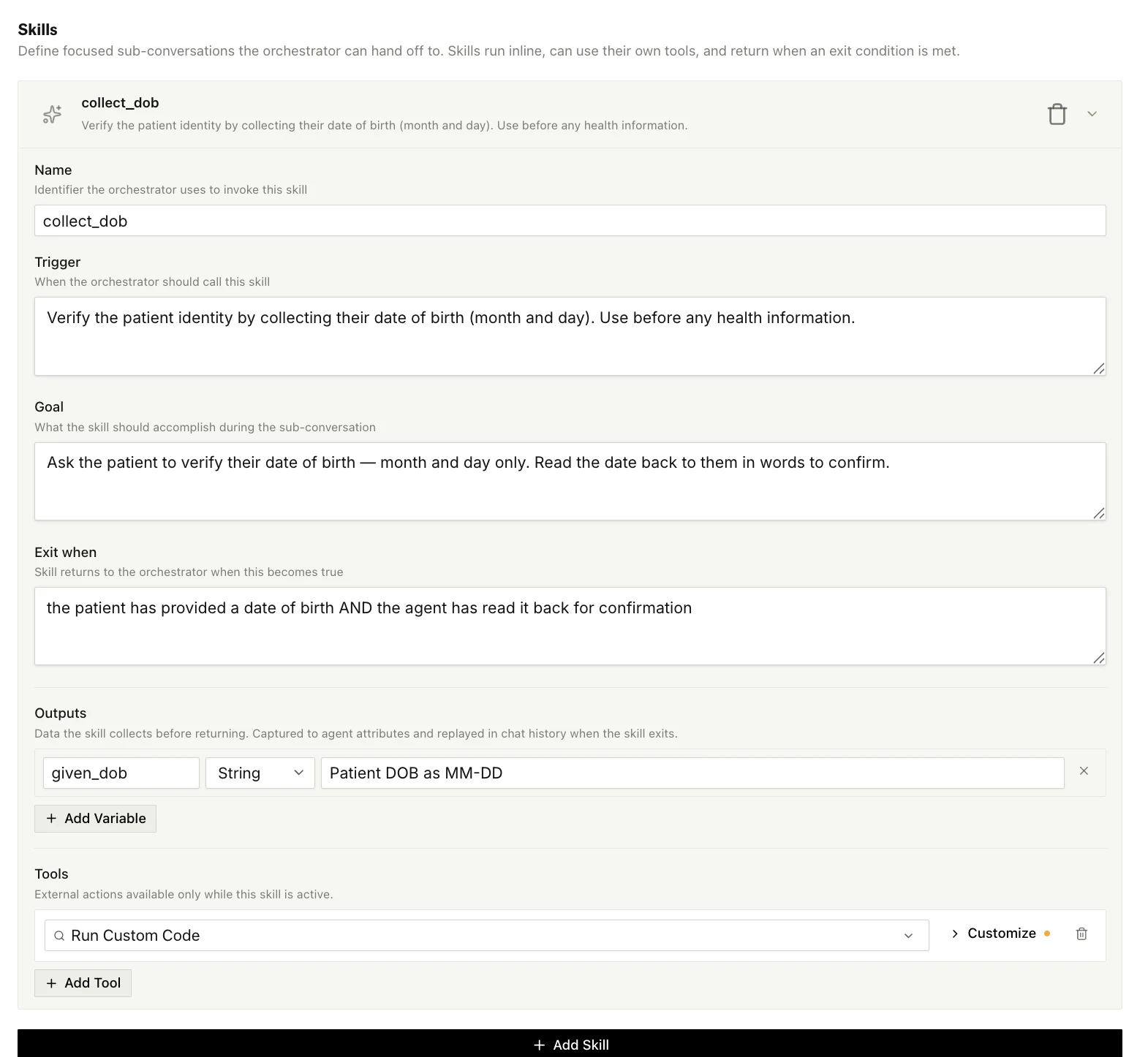
- Personas can now define focused sub-conversations called Skills. Each skill has a trigger, goal, exit condition, output variables, and its own tools, so you can isolate sub-flows like ID verification or payment collection
- Automations now support a post-call trigger. Fire actions like webhook posts, CRM updates, or follow-up SMS when a call ends, with a live payload preview for picking specific fields to reference
- [Enterprise] Custom alerts now run over real post-call signals instead of plain-language LLM conditions. Build rules from citation variables, disposition outcomes, or pathway tags via a new typed source picker
- Add a scheduling picker to your embeddable web chat widget from the widget’s Native Custom Components section. Customers see available times and book a slot directly in the chat instead of being sent to an external calendar
- [Enterprise] Phone number SMS configurations can now disable the conversation timeout. Leave the field blank to keep the conversation open indefinitely
- Norm is now metered per message and requires a non-zero credit balance to use